• Home
  • About Veronika
  • Testimonials
  • Gallery
  • Blog
  • Contact
Veronika Sophia Robinson
  • Facebook
  • Twitter
  • Instagram
  • Pinterest
  • Celebrant
    • Weddings
    • Funerals
  • My Books
  • The Oracle
  • Menu
  • Walking the Path of the Ancestors: From Wismar to Modern Celebrations

    Read more
  • The Five Elements of Everyday Ceremony: Grounding Magic at Home

    Read more
  • How Small Objects Hold Our Grandmothers’ Magic

    Read more
PreviousNext
123

Blog Posts

Celebrant Retreat

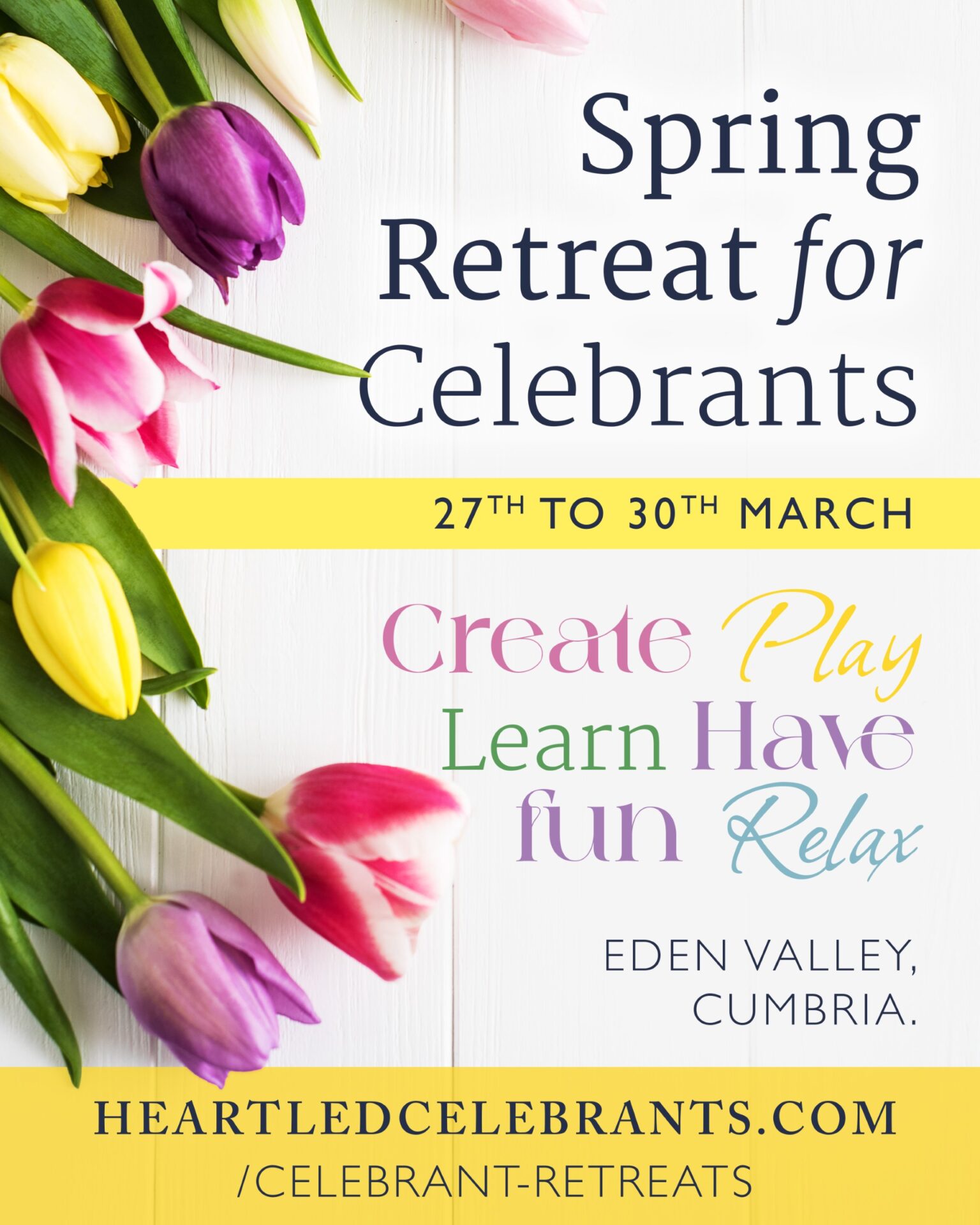
Celebrant Retreat in Cumbria: Spring 2026

Celebrant Retreat

Celebrant-Retreat Theme

The theme of our Spring retreat is The Creative Fire.

Our celebrant retreat offers love, luxury, gentleness, and time to relax. A heart-filled healing haven where you have the space to return to your creative self. This gorgeous getaway, in a creative environment designed for celebrants, will give you the space to explore and experiment in a safe and supportive way. A consciously curated space to honour your creative spirit, each day you’ll have a chance to embrace a sense of wonder, play and joy.
Creativity is manifestation: we are bringing something, that didn’t exist before, into being. During this retreat, you’ll learn to listen out for your creative voice and connect with your inner artist. We offer a gently structured and nurturing environment for you to ‘play’.
You will come away understanding and being able to implement the five corners of The Creative Fire and the three elements to sustain this through your professional (and personal) life.


Apart from our structured sessions, there’ll also be time and space for resting, walks in nature, or taking part in crafting a druid’s besom or coffin-blessing brush, rustic vow-renewal booklet and gift cards for clients, and more.


When?
5pm Friday, 27th March to 10am Monday, 30th March 2026
We keep our not-for-profit celebrant retreats deliberately small (max. 10) so you can get to know other attendees and enjoy a relaxed environment.
 

Where?
Held at Glassonby Hall, Eden Valley in Cumbria
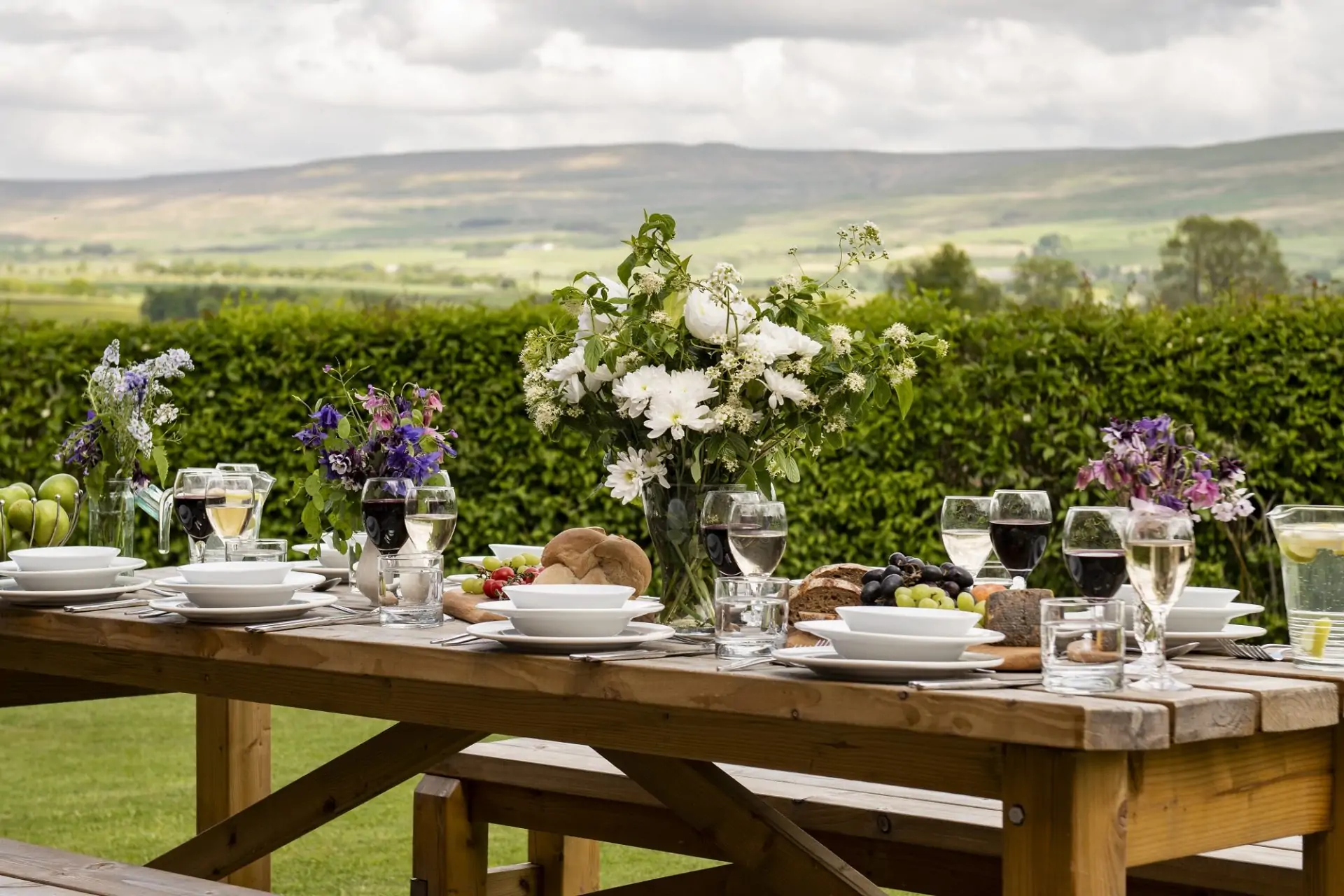
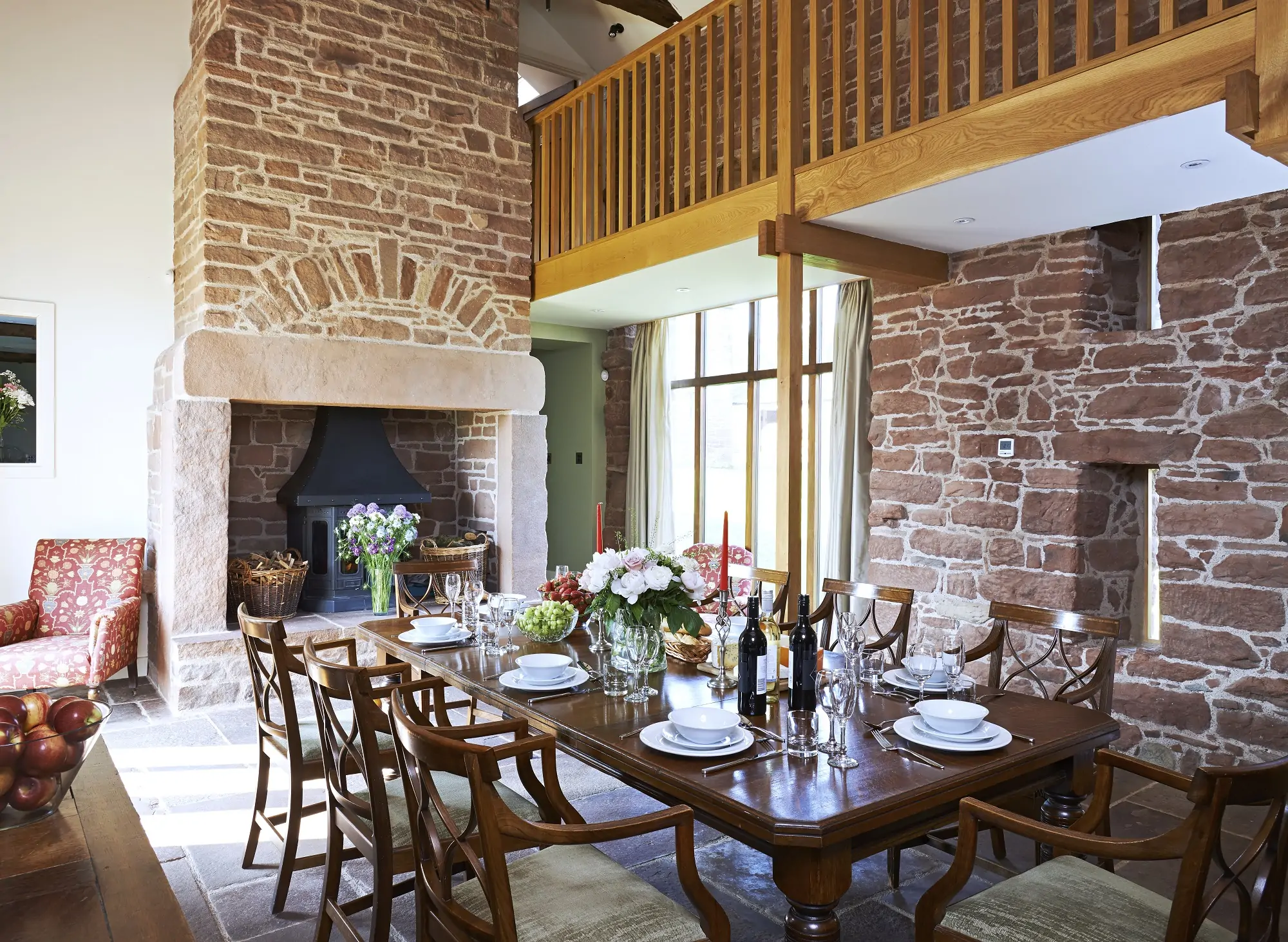
This lavishly restored five-star 15th Century Cumbrian Longhouse of Baronial splendour offers a peaceful retreat set amid rolling Cumbrian fells and farmland. When you arrive, you step into the vaulted main hall, with vast stone hearth, arrowslit windows and iron chandeliers. Don’t be surprised if you sense the medieval revelry of yesteryear. We eat in the flagstone dining hall for more formal meals and gather in the Aga-warmed large kitchen for breakfast and lunch. This peaceful retreat is a cocoon from the world with its beamed living room and deep windows with views over the Cumbrian hills. Deep sofas and a grand woodstove offer just the place to sit back and relax. Let yourself be enchanted by the Hall’s contemporary opulence layered over medieval majesty.


Celebrant Investment
£555
Includes

  • your own double bedroom for three nights in 5* luxury accommodation
  • all sessions and materials with our carefully chosen tutors
  • a nourishing vegetarian menu created by our private chef.

£444 (non-residential)

Includes

  • all meals
  • all workshops
  • all materials

Booking Form
To receive a booking form, email: veronikarobinson(at)hotmail.com

Tutors

• a gilder
• an internationally renowned potter
• a calligrapher
• creativity coach
• novelist and celebrant with 30 years experience
• a comedy writer to help you infuse humour and playfulness into your celebrancy


VERONIKA ROBINSON
Veronika will open the retreat with a workshop exploring The Five Cornerstones of Creativity, and how we can use the elements of nature in the creative process. Veronika is a celebrant (across all rites of passage) with 30 years of experience and has learned how to lean into her intuition and bring creativity to her ceremonies. She’s co-tutor, along with her husband Paul, at their boutique celebrant training school: Heart-led Ceremonies Celebrant Training.
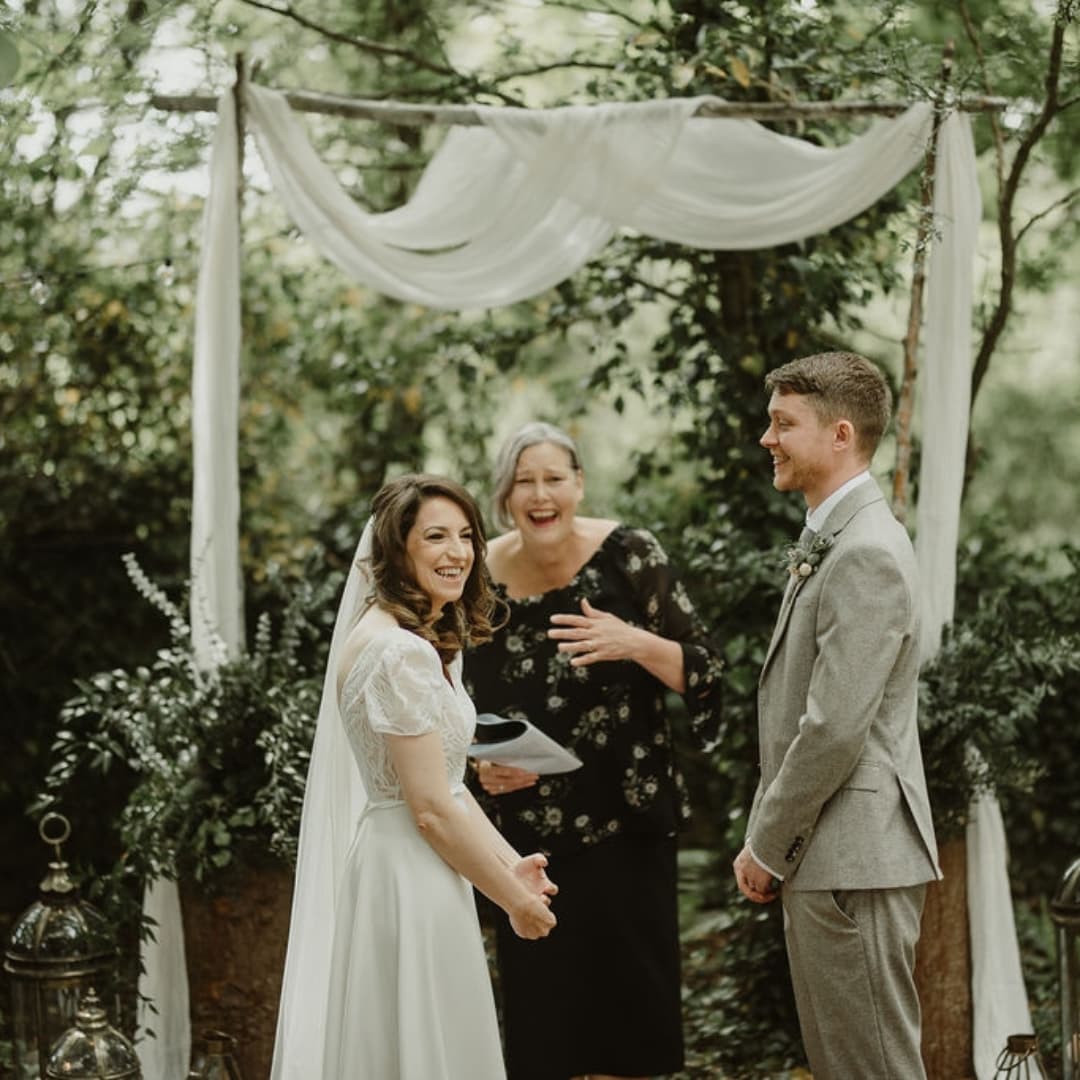
 

Veronika Robinson officiating Emily and Ben’s beautiful woodland ceremony


MARTIN AND SIOBHAN MILES MOORE
Siobhan and Martin are the husband and wife behind the multi award-winning Miles-Moore Ceramics. Their work can be found in public and private collections all over the world, as well as in world-class restaurants and bars.
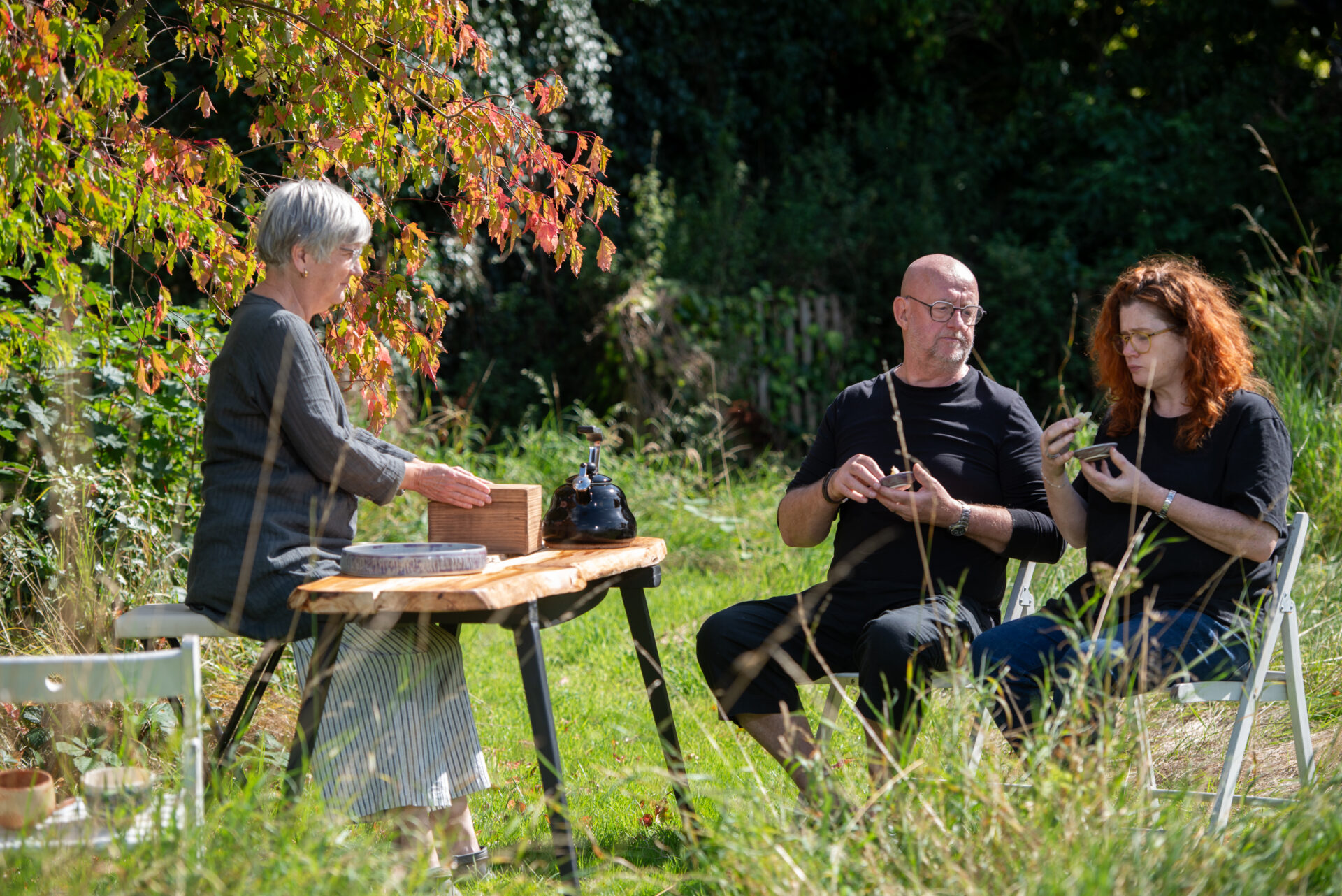
 

Siobhan and Martin

By the time Martin graduated from UCLAN in 1989, he had developed a fascination with sacred and ritual vessels. His final degree show featured Coptic and Ginger Jar forms amongst others. It is only in more recent years he has felt able to embrace sacred communion and Tea Ceremony vessels.

Siobhan ‘s work is an exploration of perspective and the importance of understanding our own place in the world. Her elemental work incorporates gilding with precious and semi-precious metals to add greater light and contrast.
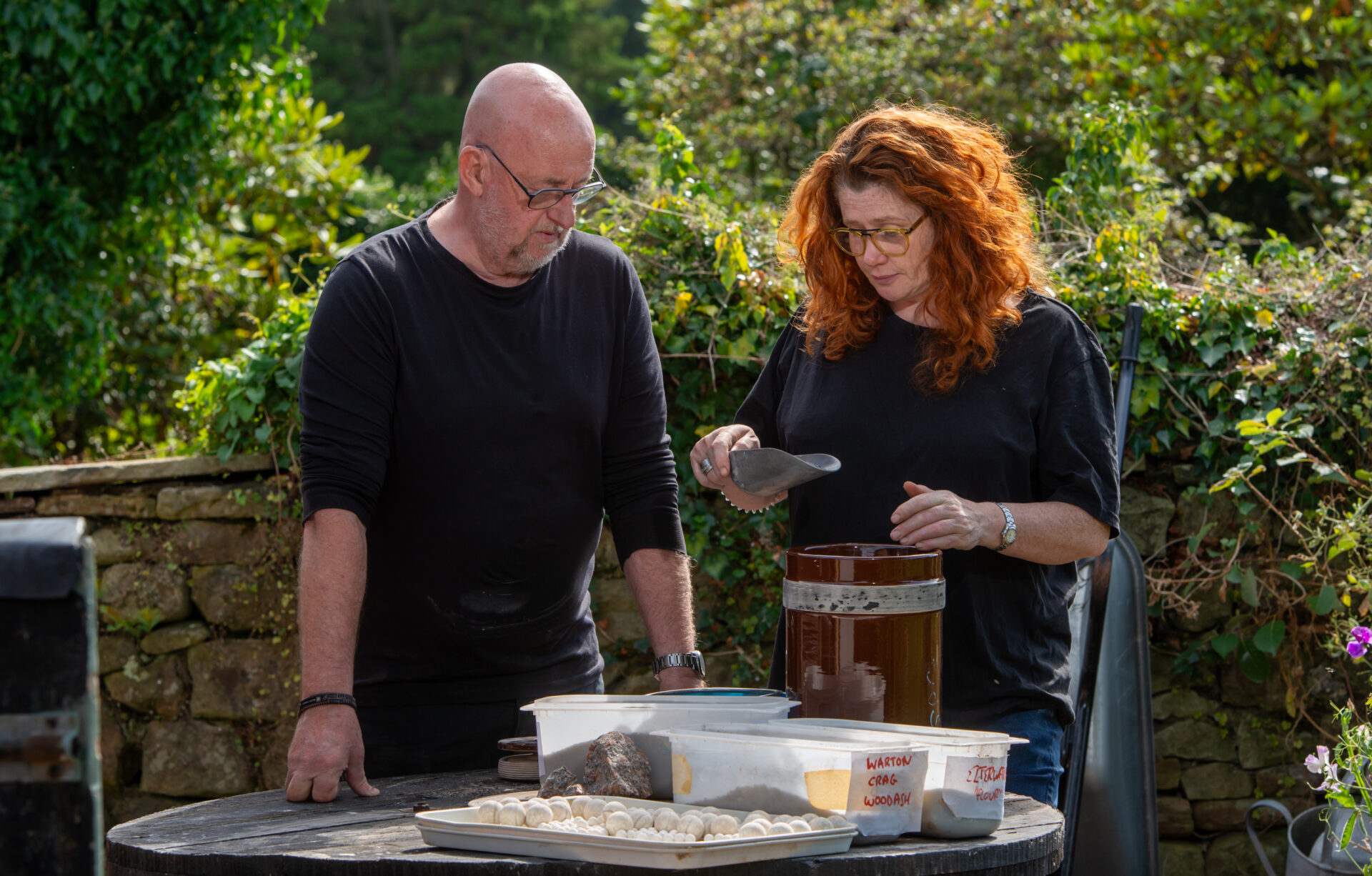
 

Siobhan and Martin

HANDBUILDING A QUAICH
Martin will begin the workshop with a demonstration, throwing a few key Chawan forms and explaining their importance within The Japanese Tea Ceremony. You are then invited to contemplate a range of natural materials.
You will be shown how these can be used to mark make and enhance a clay form.
Then you will be given some time to experiment and play with some clay, learning how it feels and forms, how it bends and breaks.
Key Task – you are then invited to apply your new knowledge and experience into hand building a simple, unique quaich form. You will be provided with all the materials and techniques needed to achieve this.
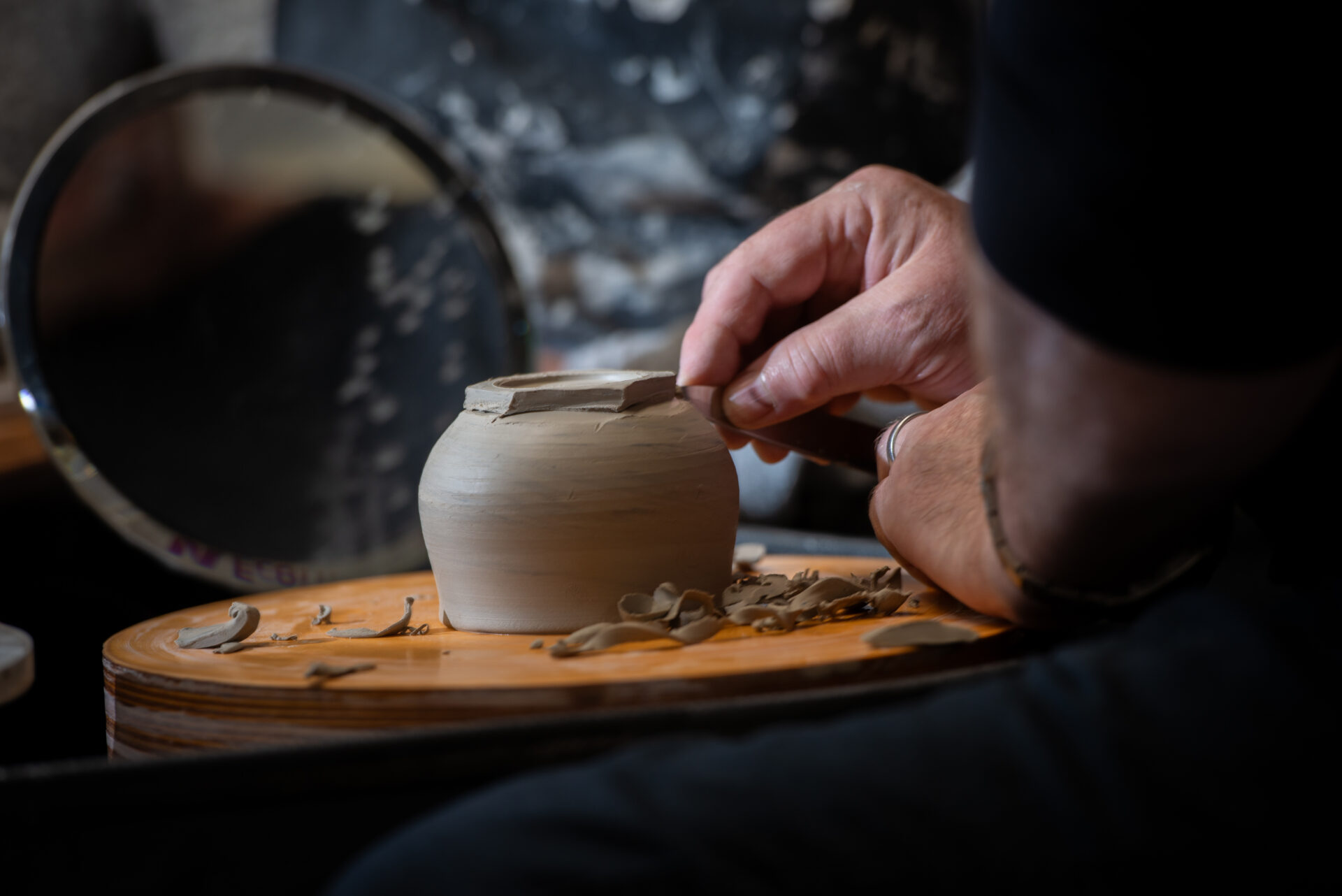
Martin 


Martin and Siobhan will then take your work away, slowly dry it, then fire it to 1000 degrees, glaze it like the sample shown, then fire it to 1300 degrees.
Your finished work can then be returned to you by post (£10 extra) or collected from Veronika or Siobhan at a later date.

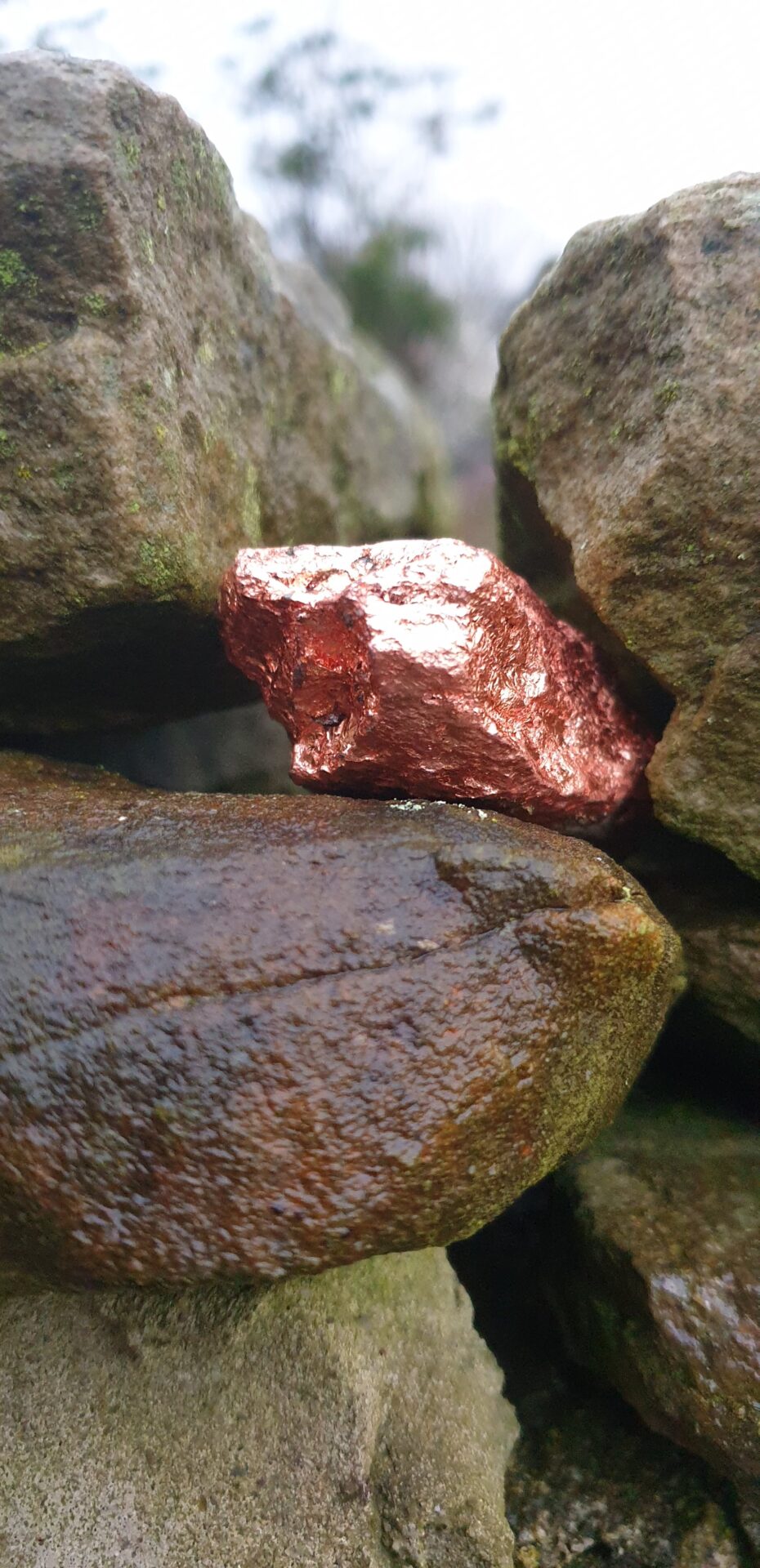
CREATING A GILDED GROUNDING STONE
Siobhan will begin the workshop with a brief overview of the history and background of this ancient and endangered art form.
You are then invited to select two stones that speak to you from our responsibly sourced collection.

After a briefing and opportunities to understand the various materials on offer you will gild your first stone. This stone will be to practice techniques and approaches.

When it comes to your second stone you are invited to gild this stone as an active meditation. Imbuing all the power and the energy of the meditation into your work on the stone. Once both stones are complete we will then seal and protect them, leaving them to dry in the daylight before adding them into your ceremonial tool kits.


Copper, Silver and Gold Alloys are included in your fees, Gold leaf and platinum leaf are available for an additional £10 charge.

CLAIRE GOULD, CALLIGRAPHER

Immerse yourself in a creative calligraphy workshop with Claire. The art of calligraphy shapes words into beautiful pieces of art. The practice is mindful and creative: as you get to know your calligraphy pen you’ll enjoy the swooshing of your pen, the novelty of a dippy ink pot and the simple repetition of shaping letters.
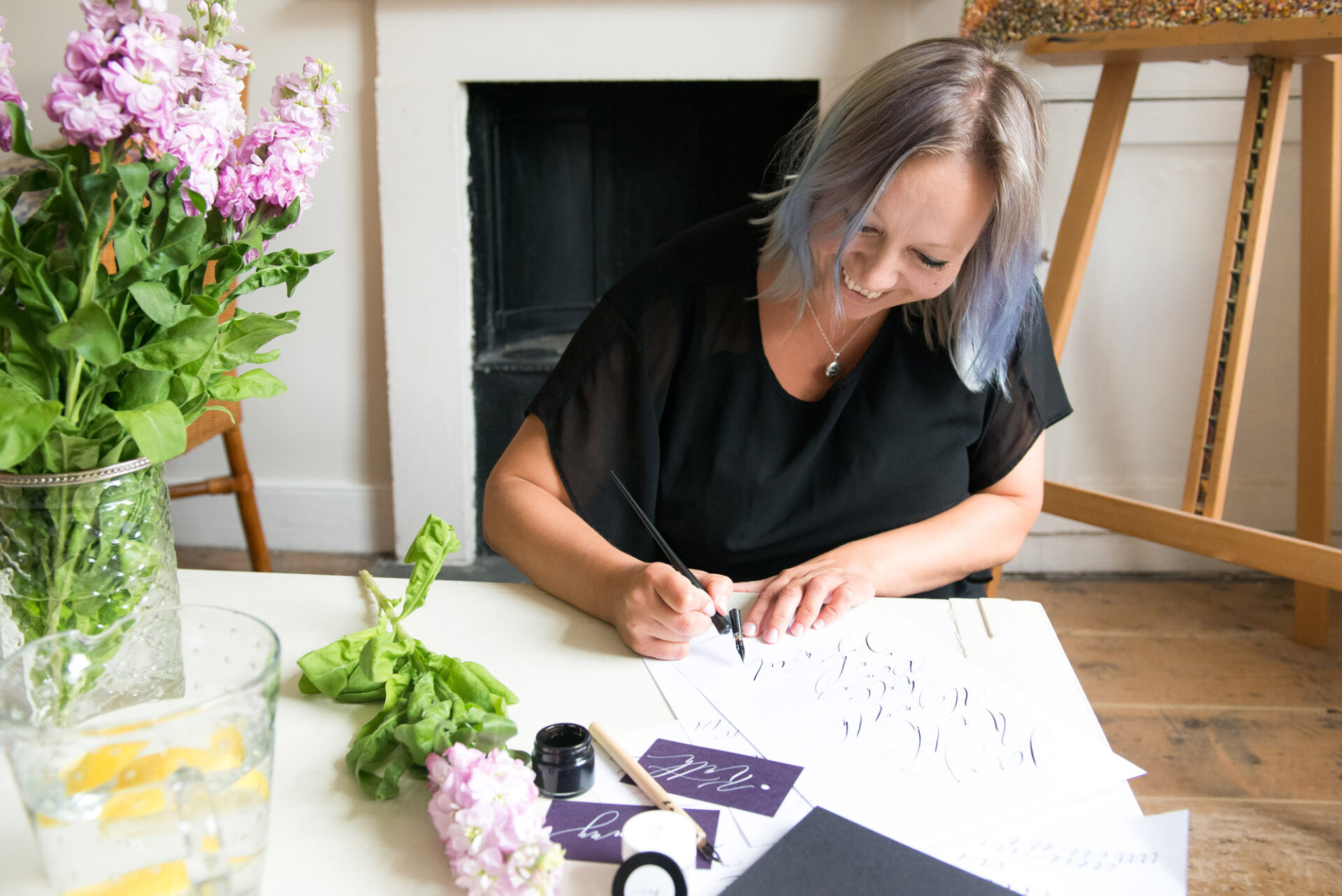


Calligraphy used to be a prerequisite for being a bank manager. The days of calligraphy being dull are long gone! Now it’s a way to combine heartfelt words with joy and colour, to experiment and play with inks and papers, and to enjoy slow writing. Focus on the words of a lovely quote as your nib bends in and out of letters. Create flowers and leaves with magical, shimmering inks and delicate, careful brush strokes.

A relaxed and therapeutic 2.5 hour workshop learning a modern script through tracing letter shapes and mindful repetition. You’ll take home a project of your own, a motivational calligraphy quote to inspire and bring joy.
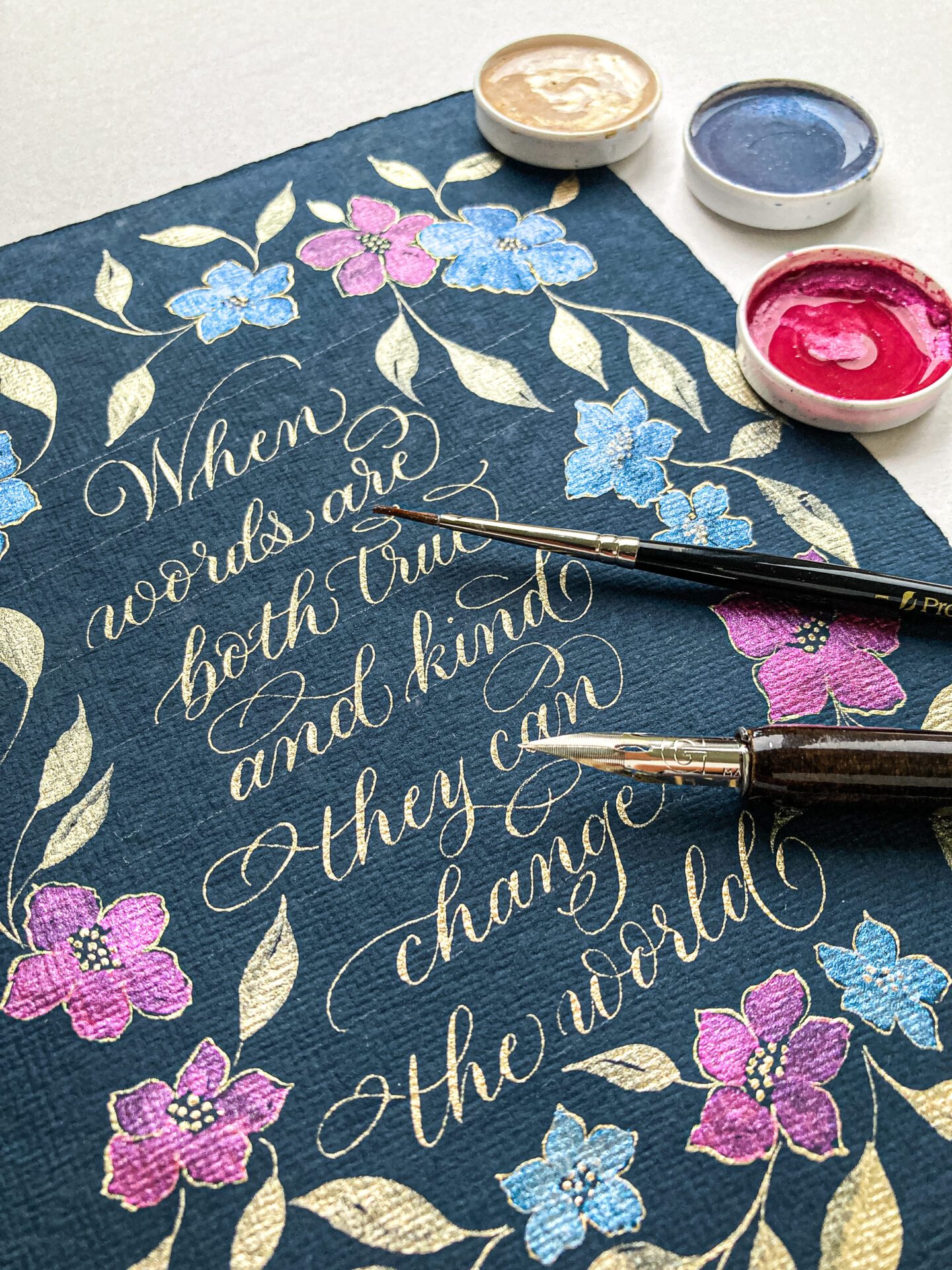

KATE BRUNDRETT, ARTIST & CREATIVITY COACH
Kate Brundrett, an artist, illustrator and leadership coach, will lead an experiential afternoon workshop on Finding Your Essence.

 

PAUL ROBINSON, COMEDY WRITER


INFUSE YOUR WRITING WITH HUMOUR – HOW TO THINK IT! HOW TO PRESENT IT!
Paul’s sense of humour was spotted by a teacher when he was five (Paul, not the teacher!) and he’s seen the funny side of life ever since. Amongst other things, he’s won a radio award for “World’s Best Afternoon Show”; he was a writer and feature artist on the television variety show “Saturday Live” in New Zealand; and he’s the author of the successful book “You Must Be Joking!”. Paul’s comedy career includes writing parodies, being a popular compère, mimic and ventriloquist. (Don’t ask him how he does that, because he’ll probably say “Sit on my knee and I’ll show you”!)
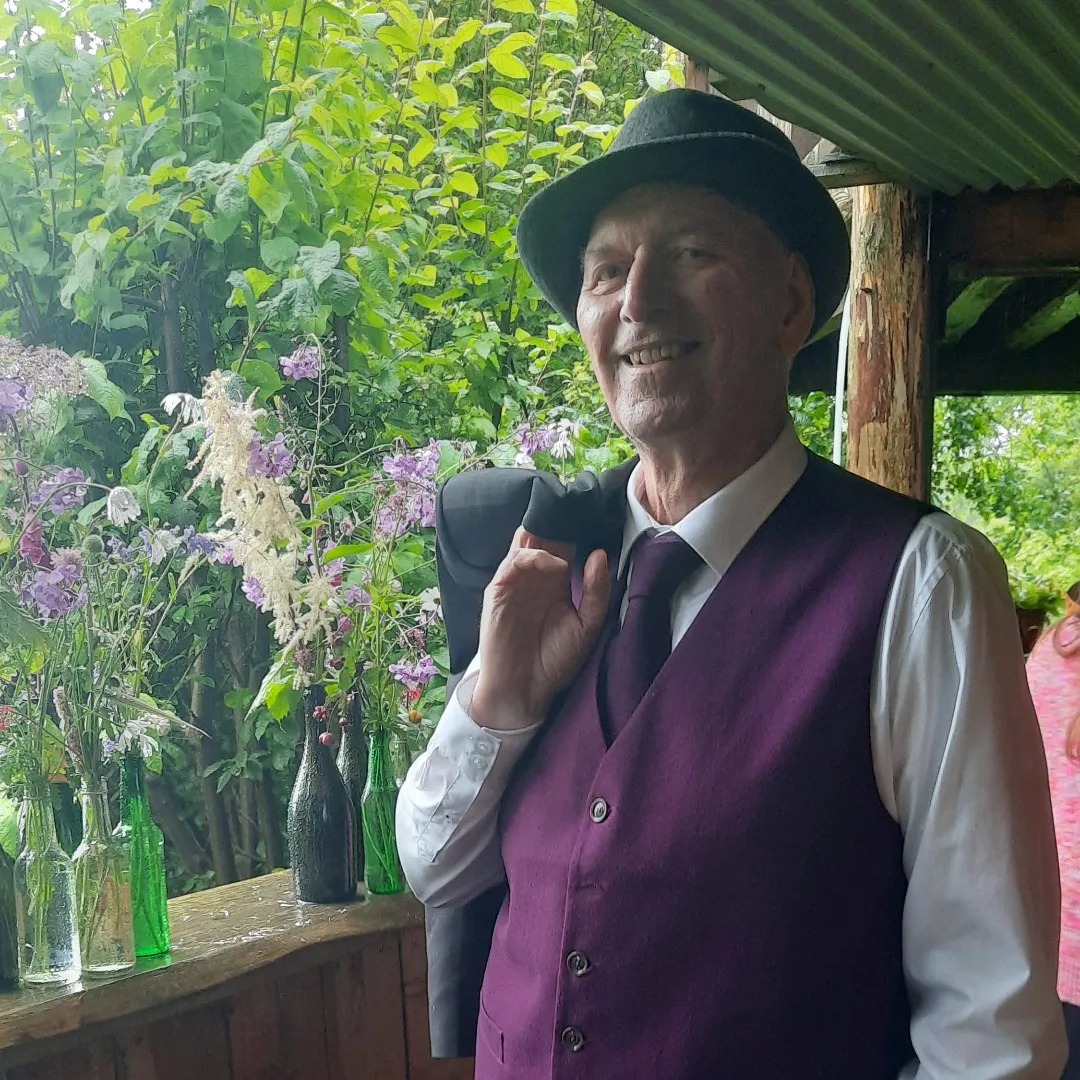
 

Paul Robinson

December 26, 2025/0 Comments/by Veronika Sophia Robinson
http://veronikarobinson.com.temp.link/wp-content/uploads/2025/12/sixteen-miles-out-7BDHpvbD7tE-unsplash.jpg 1536 1920 Veronika Sophia Robinson https://veronikarobinson.com/wp-content/uploads/2025/04/Updated-logo-colour.png Veronika Sophia Robinson2025-12-26 17:50:112025-12-26 17:50:11Celebrant Retreat in Cumbria: Spring 2026
Celebrant Training

Do You Have To Train To Be A Celebrant?


Do you have to train to be a celebrant?


By Veronika Sophia Robinson

This is probably one of the first questions someone asks when they’re playing with the idea of a career in celebrancy. The short answer is: in the UK, no. Celebrancy, like the wedding and funeral industries, is (at the time of publishing this blog: December 2025) an unregulated industry. That means any old cowboy can set up and sell their wares. The question is: should they?


Celebrancy is ripe with stories of ceremonies ruined by incompetent celebrants. It’s heart-breaking because the people they are paid to serve will NEVER get that ceremony again. 

As someone who has been officiating ceremonies for more than thirty years, and training celebrants since 2017, my advice is: give this profession the respect it deserves. It might look easy to stand up in front of an audience of wedding guests or congregation of mourners, but that doesn’t mean it is.  Officiating a ceremony is a small part of the role. There are so many aspects to being a celebrant that to jump in, and be there to support people in their pivotal life stories, requires a full understanding of the role. And that’s not something you learn or pick up in two minutes or get off a quick online course or a two-day ‘turn up and get a certificate’ course. The standards for entering this profession should be rigorous, and led and maintained by those who have a long standing as celebrants (not those whose long background is in marketing or business and very little real-life celebrant experience).


Veronika officiating Sarah and Ned’s Wedding


One thing I hear from our celebrant-training students (and they say this after the first couple of hours on day one!) is that they can’t believe how much is involved in the role, and that they really had no idea.

Sometimes a potential wedding client asks “Do we have to have a celebrant? Can we just get a friend to do the ceremony?” My response is: “Yes, your friend can do it for you. No problem. But you might want to think really carefully about whether that’s the best decision.” There is a world of difference between a friend officiating a ceremony and an expert skilled in holding the space, with experience in getting the words off the page, and guiding people through the liminal space of their ceremony. Do they have the skills to deal with the unexpected?

It might be tempting to skip celebrant training and tell yourself you’ll pick it up on the job. There’s nothing to stop you doing that but is it fair for people (mourners or wedding couples for example) to have their once-in-a-lifetime moment in the hands of someone who isn’t 100% clear about their role?

It’s not dissimilar to insurance. It’s not a matter of can you afford insurance? Can you afford not to have insurance?

Can you afford not to be a professional celebrant trained to an excellent standard?

Extract from funeral script written by Veronika Robinson


What Google and AI Can’t Teach You About Being a Celebrant


I can, hand on heart, say that I’ve never outsourced the writing and creation of a single ceremony script to another celebrant or used AI to write one. It is becoming increasingly common for celebrants to engage in such a practice. There’s also a new generation of celebrants who have chosen not to spend money and time on seeking suitable training, and have decided to use Google and AI to give them entry into this vocation/career. While, on one hand, I can understand someone who has been asked to officiate a friend’s wedding turning to the Internet for help (because, let’s face it, they have NO idea how much is involved in this job), what I can’t (at any level) understand is why someone would base their new career on gathering titbits of information that they can’t know to be accurate, authentic or based on adequate experience.

We’ve had quite a few people come to us for celebrant training who’ve actually trained elsewhere but felt something was ‘lacking’. They’ve described the differences as like ‘night and day’. Their previous courses, they said, were not much better than scrolling the ‘net.


Veronika Robinson preparing to officiate a funeral at Ashgate Lane Cemetery Chapel


Here’s why Google (insert any other search engine) and AI won’t give you what you need for this role.

1. The key word here is ‘artificial’ (false, fake, faux, counterfeit, etc.) By choosing that route (to save time, money, or other) you are not getting the lived experience of someone who has successfully mastered the art and craft of celebrancy.
2. AI and Google will not show, demonstrate and explain the nuances of working with clients (especially ones who may be particularly challenging, for whatever reason) and how you navigate these relationships with care, compassion, understanding and expertise.
3. Any celebrant worth their salt will not be putting up well-written, beautiful bespoke scripts online so how the heck would AI the Poacher know what one looks like? The content of ‘order of service’ examples online is laughable, to say the least.
4. How does AI the Poacher (and his bestie Google) teach you how to use your voice to its best advantage, and guide you through learning presence over performance? There’s no point asking your partner or family member to give you feedback on your script or presentation because they don’t know what to look for.
5. Will AI and G-boy, rigorously go through your training scripts (like I do) and highlight all the areas which need improving? Do they know all the behind-the-scenes work involved in this job? Will they teach you what’s required to work in a crematorium, other chapel or burial ground; and how to seamlessly work with bereavement staff and funeral directors? Will they show you the ‘journey to ceremony’ regardless of the rite of passage? Do they understand the sensitivity required for working with the bereaved? No, no, no and no.
6. A and G have no ‘intelligence’ (emotional or otherwise) about the etiquette and practices required in this role. I once read a book on how to be a funeral celebrant and nearly passed out when I saw that to be a funeral celebrant all you need is a printer, paper and laptop. Nowhere in the book was any of the information that takes weeks and months (indeed years) to learn. It’s not just about writing a script, but understanding the logistics of choreography in any ceremony.
7. There’s a new trend in celebrancy for ‘unscripted ceremonies’. That’s all very well, but what about accountability? Even with a script, there are many, many tales of celebrants getting things wrong (because they didn’t show the client the script and have it approved or didn’t save the latest draft that was approved). You’re opening yourself up to a potential law suit if you don’t take responsibility for what you create and deliver. The only reason a scripted ceremony might be considered ‘boring’ is because the celebrant is unfamiliar with what they’ve written (that is, hasn’t rehearsed it many times) or it is poorly written. If the celebrant is enthusiastic about sharing the ceremony, that will shine through.
8. If you want to avoid the rigour which comes from excellent training (like ours, at Heart-led Celebrants), then you won’t last long with clients. They are, in effect, your employers. Your job is to take direction. If you’re unable to receive honest and open feedback from a celebrant trainer, then the day a client ‘tears your script apart’ will knock your confidence in ways you couldn’t imagine.
9. When I train someone to be a celebrant, I see their journey as a student akin to that of an apprenticeship. They are taking time to learn from someone who has spent years (and thousands of ceremonies) mastering their craft. They have seven-day-a-week access to tutor support, guidance and mentoring to help them on this path. As a trainer, I am invested in someone’s learning. I want the best for them, and I also care about their future clients. Do you think A and G will be by your side when you’re officiating your first funeral for a baby or a death by suicide? Will they be there when the bride is having an emotional breakdown in the minutes before her ceremony? Will A and G teach you the hundreds of small details that become part of an experienced celebrant’s ‘muscle memory’ of what does and doesn’t work? Will they be there for you when you’re heading off to officiate a funeral on the day one of your loved ones has died?
10. Your clients get one chance at their ceremony. Respect them enough to ensure you have the skills to know what you’re doing and the qualities to be a great celebrant. The latter has nothing to do with popularity or meaningless celebrant awards and has everything to do with professional integrity.

What you think you’re saving in time and money by choosing A and G over excellent training will cost you more in the long run. So much more. And not only that, it will impact every client you have.


Veronika Robinson officiating at Emily and Ben’s woodland wedding at Low Hall The Lakes


Veronika Robinson and Paul Robinson are a husband and wife team whose boutique celebrant training Heart-led Celebrants attracts people from around the world. Heart-led Celebrants has earned a reputation for excellence in celebrant training, and those who are certified exemplify the highest standards in the industry.
 

We promise that our celebrant-training courses exceed what you’ll learn on NOCN courses.


Veronika has been a working celebrant (internationally, and across all rites of passage) for more than thirty years. She generously shares her experiences with celebrants-in-training. Veronika is the author of many books including the popular Celebrant Collection: Write That Eulogy; The Successful Celebrant; Funeral Celebrant Ceremony Planner; Wedding Celebrant Ceremony Planner; The Discrimination-free Celebrant; The Five Elements. She earned her Masters Degree in Creative Writing from University of Cumbria.

Award-winning voice artist, Paul Robinson, has had a whole career centred around his voice and other people’s. He’s highly experienced as a celebrant, trained actor, drama coach, voice-over artist, singer, broadcaster, compère, and ventriloquist. Paul is an excellent communicator and teacher, and has a sixth sense about how to relate to individuals, groups and audiences.


December 26, 2025/0 Comments/by Veronika Sophia Robinson
http://veronikarobinson.com.temp.link/wp-content/uploads/2025/12/unseen-studio-s9CC2SKySJM-unsplash.jpg 1280 1920 Veronika Sophia Robinson https://veronikarobinson.com/wp-content/uploads/2025/04/Updated-logo-colour.png Veronika Sophia Robinson2025-12-26 16:35:062025-12-26 17:10:05Do You Have To Train To Be A Celebrant?
Celebrant Training

Celebrant Training School


© Veronika Sophia Robinson


Here in the heart of rural Cumbria, my husband Paul Robinson and I offer bespoke celebrant training through our boutique celebrant-training school Heart-led Celebrants.
What our celebrant training website (a portal into our world) deliberately lacks is the ‘slick, corporate look’. Why? Because there is nothing about the look or the reality of that sort of training that prepares you for real-life celebrancy. So, what do we offer? Down-to-earth, realistic, lived celebrant experiences that we generously pass on in our teaching. After my thirty years of celebrancy (across all rites of passage) and, for Paul, more than five decades earning his living from his voice and working with other people’s, you’re in the most capable and qualified hands. A lot of care, thought, time and energy investment has gone into ensuring each person is as prepared as possible before they take on their first ceremony.

One of our recent students, wrote:
“From my perspective, to be trained in something you have to build a depth and knowledge of your subject. You should fully understand it and the checking of that understanding should be robust. The training should stretch and challenge you, feeling structured and progressive, with support on hand to guide you if necessary. This has been my experience with you and Paul. All of the things I expected are there – and more. So, in short, thank you. I know how much time and effort it takes to get it right. That time and effort is reflected in every aspect of my time with you both, and it’s a pleasure to experience. Thanks again, Frank”

Although our role is ensuring that each and every student receives the same information, care, attention to detail and rigorous feedback to help them be the best celebrant they can be, we also understand that the learning journey is a co-creative process. As teachers, we can only meet a student as far as they are willing to learn, invest time, and develop skills. Our job is to help facilitate the change that will enable someone to step into their career as a Heart-led Celebrant with confidence, compassion and creativity. HOWEVER, it is the celebrant-in-training’s responsibility to enact that change.

There are many aspects to our training that make it stand light years ahead of other training courses (even those with the slick, corporate £4.5K price tag). Examples include our legitimate real-life experience as celebrants. I also keep my foot in the celebrant world, even after thirty years, by still taking on ceremonies. This gives our students the opportunity to ‘shadow’ me (if desired) at no additional cost, but with the continued one-to-one guidance.


Paul works with each student for bespoke voice, communication and presentation training.

We offer guaranteed lifelong tutor support to our certified celebrants. Most of our students reach certification. From our perspective, we will bend over backwards and do everything we can to help someone reach that point IF they are putting in the necessary work. It is important to understand that not everyone has the passion, curiosity, desire or dedication to continue the journey. I always say (and see it every single time) that the level of care, creativity and consciousness that someone puts into their training is a clear indicator of the way they’ll approach celebrancy.

Diploma in Advanced Celebrancy and Ritual 
Dear Paul and Veronika, Thank you for welcoming me into your home; for sharing your lovely home-made soup and biscuits – and all that tea! Thank you for your generosity in sharing your knowledge, for your guidance, and above all patience. Much love, Judy

Heart-led Ceremonies Celebrant Training
Thank you, from the bottom of my heart. Without you two, none of this would be possible. You have unlocked a part of me that I never knew existed. The fulfilment I am getting from this is completing the hole I felt inside that I’ve never been able to fill.
Kirri Clayton

There have been many blogs written on the Heart-led Celebrants website about what makes our training different to other celebrant-training companies. One aspect is about the environment in which you’ll come for your training: our home (unless, of course, you prefer to train by zoom; you’ll be in your home).

What can you find at the heart of our training? Care, love, nurturing and a sense of family. The Heart-led Celebrant Family. Each certified celebrant is autonomous, and they certainly don’t have to pay an annual subscription to be ‘part of the club’. There’s no elite inner circle. Once you’re a certified Heart-led Celebrant, we’re all in the same family. No secret sub groups. No additional payments. As I always say to our students, our support is for life.

What you’ll experience during your training with us:
• cosy hot cuppas
• chatting on the sofa
• walks in the sunshine
• eating lunch in the garden
• learning, laughing, crying
• being authentic
• deep connection
• support

These are woven through our training, and even though there is a lot to learn it is done in an atmosphere of relaxation whether that’s by a crackling fire or in the summer sunshine beneath the apple trees.

One of our former students described her training as a ‘homely experience’. Home is one of my favourite words, and I love being at home. I’ve been self employed for over thirty years and although I work at all sorts of venues as a celebrant it is all done with the bulk of my hours worked from the comfort of home. So yes, I want people to think of what we offer as homely No slick, corporate glitz here. What you see is what you get: trainers who are authentic and have vast amounts of real-life experience. When you train with us, we not only remember who you are; we welcome you into our ‘family’ and look forward to a long relationship with you.

In the words of some of our former students:

I just wanted to thank you for sharing so much with me over the past three days.
Your cosy cottage.
Your beautiful smile.
Your amazing knowledge.
Your delicious cooking.
Your energy.
I hope I will take a little bit of Veronika magic with me wherever I go. Rachel xx


The face-to-face element was simply glorious, consisting as it did of deep, meaningful conversations about life, love and the universe. What could be better or indeed more important? The days spent in Cumbria were a sanctuary of spirituality and creativity; returning to the ‘real world’ felt harsh and challenging.
Catrina Young


What a life changing experience! My heart is absolutely full from celebrant training with Veronika and Paul Robinson. Highly recommend! It’s been so nourishing, full of smiles and so yummy!! I can feel I’ve changed so much, and know more will change as this is just the beginning of my celebrant path. I’m just so grateful to have had hands-on experiences from shadowing Veronika being her beautiful celebrant self at a funeral.. shadowing Veronika with a funeral phone call… To shadowing a family visit for funeral arrangements. Bex

Diploma in Advanced Celebrancy
The day I found Veronika Robinson, I knew I had found ‘the one’. Her ethos fits perfectly with mine. She is the most wonderful woman, as well as being a top notch celebrant and author, and a brilliant celebrant trainer. She was also RUTHLESS in ensuring that every piece of work I produced for her, through her Heart-Led Training programme, was outstanding. She taught me the difference between “That’s great”, and “That’s incredible”; and how to use words to create something personal and full of emotion, how to set the tone, and how to use elements within ceremonies to fix the moment in people’s minds.
Michelle Knight, certified Heart-led Celebrant


I just wanted to drop you a line to thank you (belatedly) for your welcoming nature, delicious food and expertise in my training.
In love and light, Sandie x


Dear Veronika,
There are not enough words to thank you for the truly life-changing time spent with you in your lovely home in the beautiful Cumbrian countryside. You are an inspiration, a mentor and an advocate. You helped me to value myself and the gifts I can bring to this new chosen career. You challenged me, but in a gentle and empathetic way that made me feel that it was going to be ok to try to get my words onto the page and then “off the page”. By the time I started writing with you (and it was very early on the first day), I felt that no matter what the result was to be, I had a soft place to land, and that you would support my efforts, no matter what the end product. And, as a result, I could take risks with my emotions and my words-not easy for anyone, especially an introvert like me. I learned more about being a celebrant from you in two days than I did in the entire nine months of my previous program. I now feel that I can, with grace, humility and hard work, develop and deliver celebrations that will honour and support events in anyone’s life journey. Thank you, thank you, Veronika for giving me the gift of “you”. You are a true, beautiful and rare gem. I shall never forget our time together. Thank you. Brenda Martin, Canada

Just wanted to thank you so much for making my funeral celebrant course such an enjoyable one. You were very kind and welcoming and have such a relaxed but professional approach. And we had some giggles! I was pretty nervous about coming up but I loved every minute; and if I can be half as good a celebrant as you, I will be very happy! Lots of love, Sophie


Thank you so much for the wonderful and mind-opening days I spent with you this week. I loved every minute of learning about celebrancy even though the tears it brought out may have suggested otherwise. You obviously have a gift for listening. My mind is permanently racing so I don’t listen as well as I could, and now I’m trying to slow it all down after meeting you.
Just wanted to say a heart-felt thank you. Amanda C.

The most amazing experience! Veronika is welcoming, calming, thoughtful, energetic, tireless and teaches in such a way that leaves you wanting more! Her heart-led methodology aligns perfectly with what I want to deliver as a Celebrant, and I can’t leave without mentioning her cooking…WOW! Her pear crumble is to die for please adopt me! Kathryn Britton

My thoughts wander to my training with Veronika and Paul and the delicious, heart-full time I spent steeping in, well… Feelings.
This training was, more than I could have imagined, a really personal journey, into the place where my heart meets the world. To be a Heart-Led Celebrant of course requires tapping into the territory of this deep well of emotion, which Veronika so skillfully walked me through. Considering so many aspects of potential clients- their stories, their emotional states, expectations to work with, I felt at moments overwhelmed, though soothed by the support of my two teachers on this journey. There were the very useful practicalities of being a celebrant that give me confidence in being able to begin this work, AND, what was so unique about this training was the space they held for real depth, beauty, sadness, to be welcomed. In order to really, truly serve those who choose me as a celebrant, I need this ability to really Listen, and to glean what is important to my clients. To do this I need to know myself even better.
I was given the opportunity to really feel the importance of this work, the possibilities of holding space for others to truly shine, to deeply feel their own connection with life and love, with death and grieving. The work of a celebrant is sacred, and Veronika and Paul, each in their own way, shared the skills that keep this work sacred. I am so grateful for such a rich, alive experience of this work through my training.” Kirsten Rose, Spain

We’re now in our eighth year here at Heart-led Ceremonies Celebrant Training. A lot can happen in eight years, personally and professionally. One of the things I continue to do is maintain my celebrant practice (officiating ceremonies across all rites of passage). This is important to me for a number of reasons:


• I love what I do: making a meaningful difference in people’s lives during their transitions
• I keep up-to-date with styles, trends, legalities
• It allows me to offer shadowing opportunities to our students
• We teach best what was need to learn, and here’s the key thing: as a celebrant, you never stop learning (if you think you know everything, then you and your ego are best off finding another job)


When we started out training it was only meant as a one-off event: we attracted a group of six amazing women to train. We had such a FABULOUS time we did it again, and again. And then…someone asked me if we’d consider training them on a one-to-one basis. Sure! Why not? And here’s the thing: we’ve never looked back. This is because:
1. It opened a door to many other people who wanted the option of one-to-one
2. We saw the massive difference that one-to-one training offers (regardless of people’s learning styles or whether they’re introverts or extroverts)
3. When you’re learning on a one-to-one basis, there’s no hiding behind other students; there’s no coasting alone. As your tutors, you have our undivided attention.

When a master passes on their craft, it is akin to offering someone an apprenticeship. And a role like celebrancy? One that is based on an enormous foundation of responsibility? Well, then that apprenticeship becomes even more important. They are learning at your side and this undivided attention bestows optimal learning opportunities. Of course, a training is only ever going to be as good as the co-creative experience between the teacher and student. If the celebrant-in-training takes a lackadaisical approach to their studies, then they will only get as much out of it as they put into it and both they and their future clients will be poorer for it.

It’s not unusual for someone to contact me about celebrant training but what they’re really wanting to know is can they go and officiate a friend’s wedding without training. Well, there’s no law against it. However, what you don’t know is WHAT YOU DON’T KNOW. Almost every student we train says to me, within the first few hours of their face-to-face training, “I had NO idea how much was involved.” And why would anyone? If you’ve seen a (good) celebrant at work, they’ll make it look easy. It’s not. Their 20 to 30 minutes officiating is a small part of their job. It takes, for example, about ten hours of work behind a 20 minute funeral and about 20 to 30 hours of time behind a 30 minute wedding.

It is an honour and a privilege to officiate ceremonies, and one that I don’t take lightly.

It is an honour and a privilege to teach someone how to be a Heart-led Celebrant, and one that I don’t take lightly.

The training, however, is done with immense care, love, respect and a genuine desire to see our students thrive as celebrants and for their clients to have the best possible experience. I do this job knowing that I’m not going to live forever, but for each additional year that I’m a working celebrant I have hundreds more ceremonial experiences which I add to my vast teaching chest. You see, everything I learn helps the celebrant-in-training to learn from me about what works and what doesn’t work as a celebrant.


Veronika Robinson and Paul Robinson are a husband and wife team whose boutique celebrant training school Heart-led Celebrants attracts people from around the world. Heart-led Celebrants has earned a reputation for excellence in celebrant training, and those who are certified exemplify the highest standards in the industry.
Veronika is the author of many books including the popular Celebrant Collection: Write That Eulogy; The Successful Celebrant; Funeral Celebrant Ceremony Planner; Wedding Celebrant Ceremony Planner; The Blessingway; The Gentle Celebrant’s Guide: Funerals For Children; The Discrimination-free Celebrant; The Celebrant’s Guide to the Five Elements.

Award-winning voice artist, Paul Robinson, has had a whole career centred around his voice and other people’s. He’s highly experienced as a celebrant, trained actor, drama coach, voice-over artist, singer, broadcaster, compère, and ventriloquist. Paul is an excellent communicator and teacher, and has a sixth sense about how to relate to individuals, groups and audiences.

December 26, 2025/0 Comments/by Veronika Sophia Robinson
http://veronikarobinson.com.temp.link/wp-content/uploads/2022/09/20220731_134425.jpg 1125 2000 Veronika Sophia Robinson https://veronikarobinson.com/wp-content/uploads/2025/04/Updated-logo-colour.png Veronika Sophia Robinson2025-12-26 10:41:022025-12-26 10:52:33Celebrant Training School
astrology, Earth-based Spirituality, Ways to take care of your health

The Magic of Mercury Retrograde

“It’s Mercury retrograde!” Even in mainstream circles, it’s not unusual to hear those words bandied about as the reason for communication calamities or technical trickery. A little earlier this evening Mercury retrograded, and I did chuckle to myself that both our printers ‘played up’ today, and my email app wouldn’t work due to a ‘bug’. If you’re a bit late to the Mercury-x party, here’s a brief run down.


Mercury is the planet which rules communication, siblings, learning, primary-school education and local travel. In Roman mythology, he’s known as the winged messenger.

Mercury retrograde happens three to four times every year when its transit takes it between the Sun and the Earth. This lasts about three weeks (excluding the ‘shadow’ phases either side). Due its concentration of iron, the apparent moving backwards of the planet tends to play havoc on human behaviour, not to mention electrical items. During the retrograde phase we may notice mishaps and misunderstandings in communication. Emails go missing. Your best friend falls out with you because she completely misinterprets a message. Your car won’t start. Banking apps stop working. The list goes on.

In our home, we back up the laptops before Mercury retrogrades. Not out of fear, but based on experience. Better safe that sorry. It’s also a time to avoid signing contracts for big-ticket items (because you won’t see the fine print) or buying new electrical or technological equipment. If you’re going on any journeys, make sure you’ve had your car tuned up.

Given the number of weeks every year that Mercury is retrograde, we simply can’t go into hiding. Nor should we! Befriending this planet (also known as The Trickster), and understanding his message, is key to not just surviving but positively thriving during this transit. Mercury, during retrograde phase, invites us to go with him into a type of Underworld (just like Persephone). In essence, it means becoming more right-brained so that we allow our intuitive self more air time. If we already live an intuitive life and take time to ‘really’ listen, then the retrograde phases won’t feel so debilitating or like you’ve just stepped into heavy fog.

The magic of Mercury retrograde lies in slowing right down and turning inward. I deliberately mark off the retrogrades in my diary for the upcoming year to make sure my work load is minimal at the time. One reason is to have ‘wiggle’ room; space to manoeuvre when things may not go to plan. Mostly, I keep this time reserved for myself so I can edit books I’ve been writing. This slow-down-and-reflect time is ideal for editing, and without it, due to my normal workload, I’d never create this much-needed space. Without this dedicated time, my life would be full-to-bursting all year around. For me, Mercury retrograde is the Universe saying ‘have a rest here’. For me, it’s a natural pause in life. WE ALL NEED THIS. Sure, we might book annual holidays but are they really restful? Do they offer a mind, body and soul retreat?

You can find the magic in Mercury’s quiet time by making this a dedicated inner sabbatical.

Re-vision

Revise

Review

Renovate

Re-evaluate

Rest

Recuperate

Edit

Recycle

Declutter

Take a digital detox

Journal

Meditate


This is a perfect time to go back over previous work and check all the fine details. I know from experience that it’s far too easy to misinterpret communication. It’s not Mercury’s fault! In fact, we should thank any shenanigans that often happen around this time because they’re a reminder to SLOW DOWN. If we don’t approach this time consciously, we might find ourselves wondering if Mercury retrograde should be nicknamed Bite Your Tongue. This isn’t the time for making assumptions but showing awareness and insight. The ‘danger’ times (if you want to call them that), or rather, the times to be alert to Mercury’s tricks are when it is stationing retrograde and stationing direct. Generally, once he’s whisked us deep down into the Underworld with him, we’re okay communication-wise  for a couple of weeks. My experience is that once Mercury and the Sun are cazimi (conjunct) and Mercury is now in the heart of the Sun, it’s a lot easier to move forward with plans. This is an empowering time. Often there are revelations and divine downloads. I have this aspect in my natal (birth) chart, so perhaps I’m particularly sensitive to this during a retrograde cycle.

If you know where Mercury is transiting in your birth chart (which house, or area of life, it is travelling through) you can understand the area of learning or ‘revisiting’ that it is offering you. Some of us are particularly sensitive to Mercury’s transits and can feel the shadow of the retrograde (that is, the time before and after it stations). So, if you want to live and breathe the magic of Mercury retrograde, it’s simple. Slow down.

Smell the roses

Sip your tea

Walk barefoot on the grass at sunrise

Watch the Sun set

Write haiku

Eat mindfully

Go to bed early

Stop scrolling and read a book instead

Take a bath

Everything else can wait. Wishing you a magical and mystical Mercury-Inner-Alchemist Sabbatical.

P.S. Astrological note: To astrologers and lay folk worldwide, retrograde means ‘backward’ so there’s no need to say “retrograded back”!


Veronika is a second-generation astrologer living and working in rural Cumbria who offers face-to-face readings in person or via Zoom.

Veronika’s articles on psychological astrology have been published in two prestigious international astrology magazines: The Mountain Astrologer and (the late) Dell Horoscopes.


November 9, 2025/0 Comments/by Veronika Sophia Robinson
http://veronikarobinson.com.temp.link/wp-content/uploads/2025/11/mohamed-nohassi-odxB5oIG_iA-unsplash.jpg 1280 1920 Veronika Sophia Robinson https://veronikarobinson.com/wp-content/uploads/2025/04/Updated-logo-colour.png Veronika Sophia Robinson2025-11-09 21:11:252025-11-09 21:37:04The Magic of Mercury Retrograde
Celebrant, Ceremonialist, Earth-based Spirituality

Festival of the Wise Grandmother And Samhain

At this time of the year, shops are filled with fake spider webs, witches’ costumes, cauldrons, rubber frogs and an assortment of ghoulish items from jelly eyeballs to skeletons, and the ever-essential candy. For many children, Halloween is associated with knocking on the doors of strangers and receiving sugary sweets. This ancient festival has become known as a time to ignite people’s fears about the Underworld.


Halloween, however, was traditionally a festival which honoured the wise grandmother, otherwise known as The Crone. The Goddess is honoured by her three aspects: maiden, mother, grandmother. At Samhain (All Hallow’s Eve) it is the Grandmother (Crone) who takes centre stage as she asks that we use this time to look back over the year and go inwards to learn what will make us a better person in the coming year. It is a time of reflection, transformation and renewal. As Samhain, Festival of the Wise Grandmother, befits the season of Autumn, it is a time to let go and release anything that does not serve us.


An altar for my ancestors


What was beautiful and symbolic of the great feminine, such as the Crone’s cauldron representing the womb of the Great Goddess, has been bastardised into ‘evil witches on broomsticks casting dangerous spells’. In Britain, the tradition of children trick or treating originated with asking for donations to help the poor. In Celtic tradition, Hallow’s Eve (renamed as Halloween by the Christian Church) is the time which signifies the end of Summer (Samhain; pronounced sow en). For Celts, this is the beginning of the New Year.


The Saxons called it Winter’s Eve. The ancestors were honoured at this time of year, and it was believed by many cultures that the ‘veil’ between this world and the next was thinnest and therefore an ideal time for communication between the living and the dead. This is certainly my experience.


How can we teach our children to celebrate this tradition in a way which is symbolically rich and meaningful beyond the commercialisation of modern-day Halloween? There are many ways, such as making a special meal and serving a plate for the unseen guests.


It could be gathering unneeded items from the home, such as outgrown clothes, food staples and toys, and giving them to charity (the cycle of Scorpio is a perfect time for letting go).

Making a small altar with photos of your ancestors, and lighting a candle, allows you to create a focal piece in your home. In our family, rather than carve scary faces into pumpkins, we have traditionally cut love hearts so that the light of love shines from our windows. I taught my children, when they were young, the origins of the carved pumpkin: Irish immigrants used turnips, and introduced this idea in the USA in the 18th century.


The Law of Attraction is clear: we become what we focus on. Do we teach our children about fear and negative energies, or do we demonstrate love, and that death is a doorway to another world; and that there is nothing to be frightened of? We can educate our children (and friends) about the history of Halloween, and how it began more than 2,000 years ago as a way of honouring the Crone as well as the end of the harvest season. Her archetype, after all, is that of: you shall reap what you sow. She asks us, our wise grandmother, to take responsibility for our actions.

A Samhain Altar

There are countless ways to celebrate Samhain in your home. Beginning with a simple altar is a great way to start. Use colours and symbols of the harvest season, such as orange and black. Those of us who celebrate earth-based spirituality use black because it represents the cape of the Wise Crone, and the waning Moon. It is symbolic of the dark Earth―the underworld; a type of womb―in which seeds will gestate during the long dark Winter.

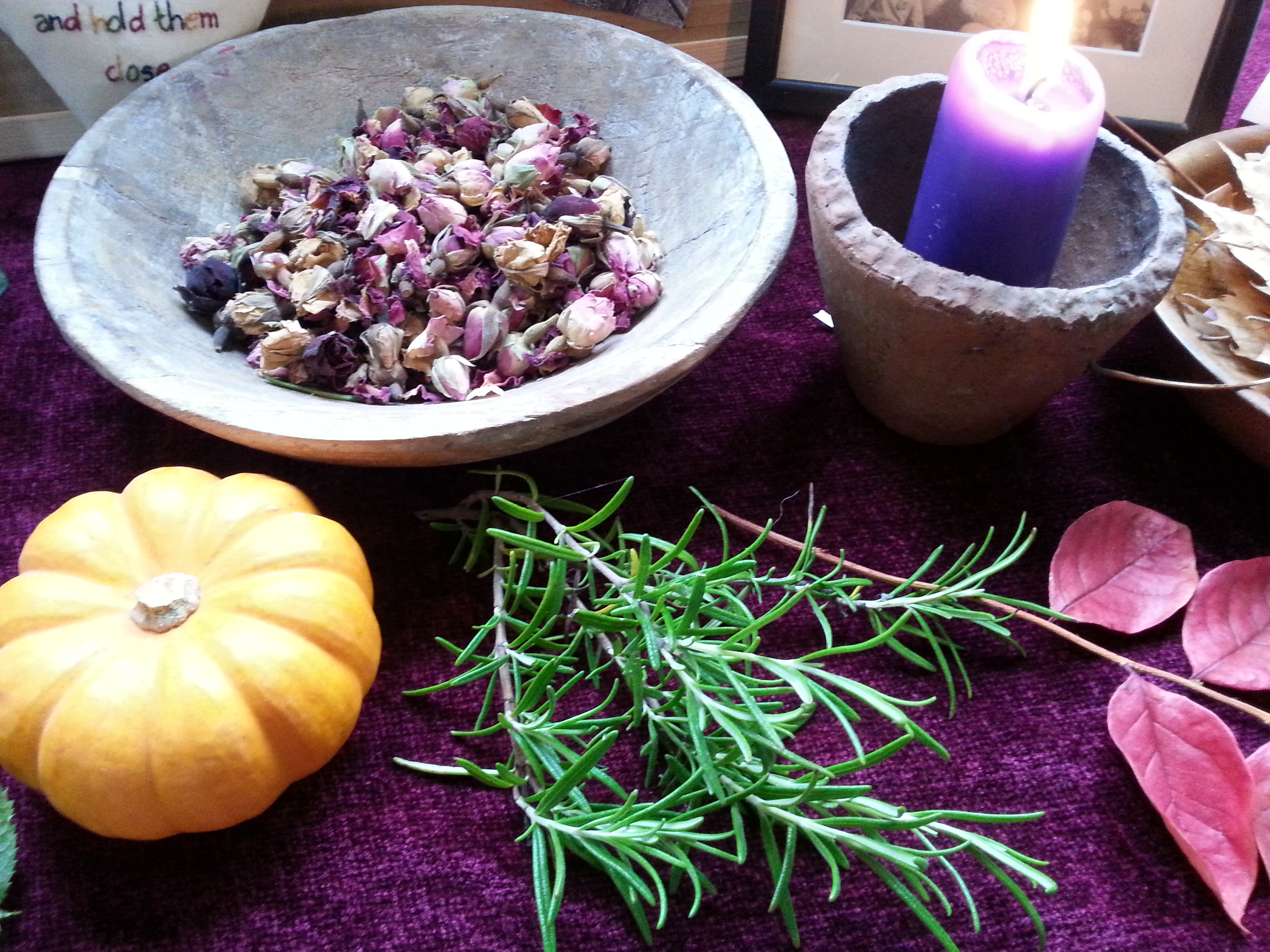
We make full use of harvest foods and plants, such as apples, acorns, rosehips, pumpkins, corn, pomegranates and marigolds. On the altar you may find beeswax candles, a cauldron, and Autumn leaves. Mugs may be filled with apple cider or warm honey mead.

On your altar, you can add photos or heirlooms of your ancestors, and invite them to meet you at the veil. Of course, in some homes the ancestor altar is on display all year round.

Sharing the Feast

When creating your Samhain feast, include a place for your ancestors and ancestresses. Just a spoon of food and a mouthful of beverage will suffice. It’s symbolic. Some families leave a bowl of porridge or soup by the hearth, or a candle in the window, while others place an empty chair by the woodstove. These acts are said to guide ‘hungry ghosts’ to comfort, and that humans will be blessed by their interactions with these wandering spirits. This is the perfect opportunity to teach your children about their family tree and ancestral history. If you have letters, photos or books from your ancestors, share them and talk about what they mean to your family. If you don’t have any items, you can write the names of ancestors on paper to place on your altar. To contact your ancestresses and ancestors, close your eyes and be mindful of your breathing. Use this time to ask yourself: who am I?

We are a collection of cells passed down from many, many people in the family line. We have their strengths, their weakness, and we house their failures and their dreams. The Festival of the Wise Grandmother is a time to honour the past and the present, and to consider what we are creating in our future.


I am the daughter of Angelika and Albertus,

granddaughter of Minna-Marie and Dieter, and Liselotte and Erwin.


I come from a long line of people who lived in the cold of Northern Europe: Vikings, shipbuilders, seafarers, mothers, craftsmen and musicians. I come from men and women whose names I do not know, but I do know they were: strong, pioneering, loving, creative, and held family as sacred.

Keep speaking aloud, telling your family story. If there are tales you know, verbalise them. You can ask the ancient ones to guide you on your life’s journey, and to protect you and your loved ones. If you feel you’re carrying family wounds, ask to be freed from them. If you wish to be instrumental in healing wounded archetypes in your lineage, then ask how you can experience and release these stories so that you and your descendants may find and write their own script.

Not everyone in our lineage is someone we wish to be connected to, but with love and forgiveness we can move forward, and in doing so, we free the energy of that person, too.

Use this time to think about your life, and what transformations you’ve undergone. You might choose to meditate, use runes, or practise divination with tarot cards. Perhaps you’ll write down your dreams, or take a solitary walk in the woods and listen to the night owl beneath moonlight.


A phoenix ceremony goes hand in hand with any celebration of Samhain. Review, release and let go. That is the message from the Wise Grandmother. If you have a patio or garden where you can create an open fire (even in a cauldron or small contained pit), use this to write down old habits or negative things you wish to release from your life to release.

Be clear: Samhain and Halloween are not meant to be negative, fear-inducing or about black magic, but quite the opposite. Perhaps those who were instrumental in changing its pure meaning were afraid of the empowerment and the strength of women?

Do feel free to share your positive Samhain and Halloween experiences. Perhaps you could invite friends to take a mindful walk in woodlands near your home. You could make a journey stick, collecting seasonal items from Nature when out walking, to share the story of where you’ve been.

Costumes are a popular part of the modern- day Halloween. According to Samhain tradition, to wear a costume or mask during this time would help to distract wandering spirits from calling you to the Otherworld before your allotted time. Tradition also suggests that it was a way of absorbing the strength of the creature you were imitating. It was common, too, to make noise using hands or drums to interrupt daily human noise. This created a portal to the Otherworld which enabled spirits to make contact and whisper messages to the living.

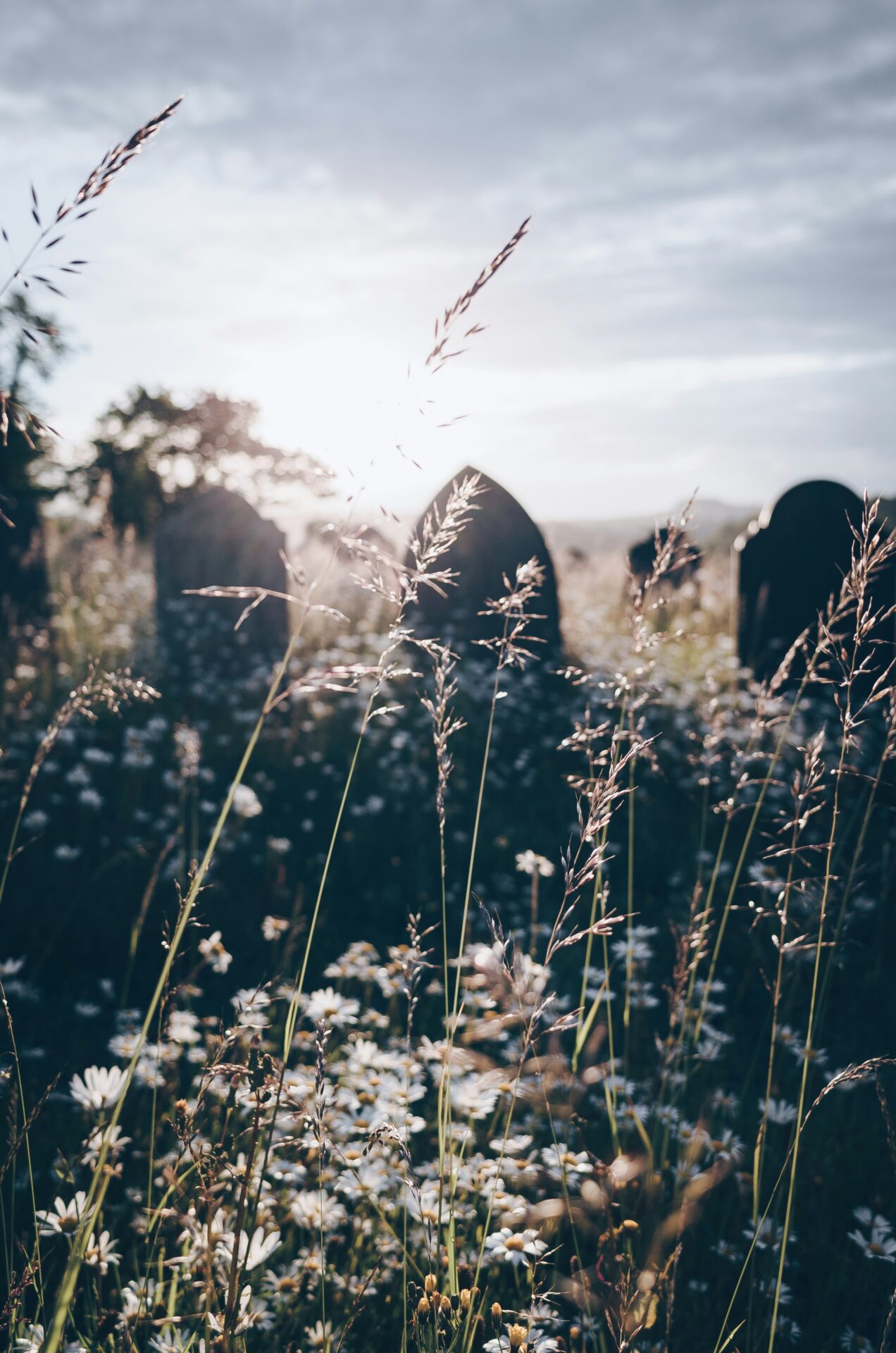
As a family, you could visit the local cemetery (even if you have no loved ones there), and leave an offering, such as water, herbs, flowers, seeds, bulbs or gemstones.

With your family, you can offer a prayer of gratitude:


Thank you dear Earth

for all that you have given us so bountifully this season.

We open our arms to the Sacred Darkness.


Take your spicy mead or cider, and make libations to Mother Earth, as symbolic of the Wise Grandmother.

We have gathered the harvest,

and Winter is coming.

We give thanks.


If you have a Goddess symbol of the Wise Grandmother, place it on your altar. You might like to make ink art or create dreamcatchers as part of your Halloween celebrations.

At the heart of any ritual and celebration which honours the Earth and her seasons is the use of fire as a symbol. Samhain and Halloween are no different. Fire reminds us that we’re in need of light and warmth. It invites introspection as we draw nearer to the flame.

Make a Samhain wreath using grain stalks, nuts, apples, leaves, conkers and rosehips, and place it on your front door.


Ensure your garden is tidy before All Hallow’s Eve so that it may rest peacefully for the Winter.

Honour the darkness by lighting candles, or celebrating with a bonfire. The light of fire is enhanced by the sheer darkness of night. The light reminds us that there is life in the Underworld.

Press flowers in old books.

Plant bulbs. As you bury them in the dark, moist and fertile womb of Mother Earth, offer a prayer to the Goddess of the Underground. Write your wishes on paper, and bury them with the bulbs.

Harvest your produce, and store well.

If you are celebrating Samhain with friends, hold hands and stand in a circle around your bonfire. Invite the ancestresses to be with you. Feel the power as each of you verbalises your connections to the Otherworld.

Wear black during Samhain to celebrate the season and all it represents.

Make spirals or hearts from seeds and nuts.

Sit outside at twilight and listen for the voices of your ancestresses in the wind.

Take a solitary walk at night time to feel the sense of the season.

Practise ecological awareness, and give back to Earth rather than using products made from crude oils or ancient sunlight.


Veronika Robinson comes from a long line of white witches (the ones they were never able to burn). She is a ceremonialist, author, celebrant trainer,  and second-generation astrologer who is happiest walking in the woods or tucked up by the woodstove.

If the thinning of the veil inspires you to have a reading with her, such as an Astrology or Angelik Reading, visit here.


October 30, 2025/0 Comments/by Veronika Sophia Robinson
http://veronikarobinson.com.temp.link/wp-content/uploads/2025/10/sixteen-miles-out-cY1mJX_N7Xc-unsplash.jpg 1536 1920 Veronika Sophia Robinson https://veronikarobinson.com/wp-content/uploads/2025/04/Updated-logo-colour.png Veronika Sophia Robinson2025-10-30 16:55:062025-10-30 17:02:58Festival of the Wise Grandmother And Samhain
Funeral Celebrant

Funeral celebrant and funeral director; do you know the difference?

Although funeral celebrants and funeral directors both work in the same field of bereavement, their roles are distinctly different.

Meadow at Ashgate Lane Cemetery Eco-burial ground


A funeral director oversees the logistics and legalities of the funeral process. They receive the body and prepare it both for viewings and for the time of committal. They manage the logistics required by law to bring a body to its resting place.


A beautiful eco-burial to say goodbye. Image by Veronika Robinson


The celebrant’s role (explained in detail below) is to oversee the ceremony. The celebrant is subcontracted (but not employed by) the Funeral Director.

The altar at Stanwix Cemetery Chapel. Image by Veronika Robinson


One of the roles of the funeral director is to ascertain if the chief mourner or their loved ones hold any particular faith. This will then guide the funeral director in recommending the right person to officiate the ceremony. E.g. a priest, minister, ordained celebrant, independent celebrant, *humanist.


https://www.finaljourneyfunerals.co.uk/

Oftentimes, families will say they want a humanist (simply because they don’t go to church). In my experience, most people carry some sort of faith or belief that has nothing to do with religion. This careful listening, on the part of the celebrant, will ensure the family has just the right tone to their ceremony.

Creating sacred space in the beautiful burial chapel at Carlisle Cemetery. Image by Veronika Robinson


A (good) funeral celebrant spends a lot of time getting to know the family and their loved one. This includes the family meeting (two to three hours) and the creating of the ceremony itself. The celebrant’s role also includes ordering music via a third-party system called Wesley or Obitus (if the ceremony is in a crematorium). They may have to order a link for viewers to watch on Livesteam and to arrange a photo or video tribute. They will be required to send through the Order of Service to the funeral director (who will then arrange to have it printed). The family may also ask us to select an appropriate poem or reading for the ceremony.


Personalising the ceremony. Image by Veronika Robinson

Writing the eulogy (as opposed to a tribute) is a major part of a celebrant’s role and can take many hours. It is our pleasure and privilege to reminisce about your loved one. My preference is to engage in biographical storytelling and share their life in a way that is beautiful and meaningful rather than simply reading a list of statistics such as “Jack Smith was born on the first of June 1929. He went to…school.” A tribute is a personal reflection written by a friend or family member that either they read out or ask the celebrant to do on their behalf. A eulogy and a tribute are two different things. The eulogy is the overarching life story. A tribute is a reflection of the relationship between a person and the one who has died.

Image by Veronika Robinson


If I’m asked to officiate in a chapel that doesn’t have its own sound system, I will bring a lapel mic and amplifier. So that a celebrant doesn’t sound like they’re just reading, and so they can maintain maximum eye contact with the audience, many hours go into rehearsing the ceremony script. Although the ceremony itself may only be 20 to 30 minutes in length, the amount of celebrant investment is about 10 to 15 hours (meeting, creating, rehearsing, officiating, travel, being at the venue half an hour early).


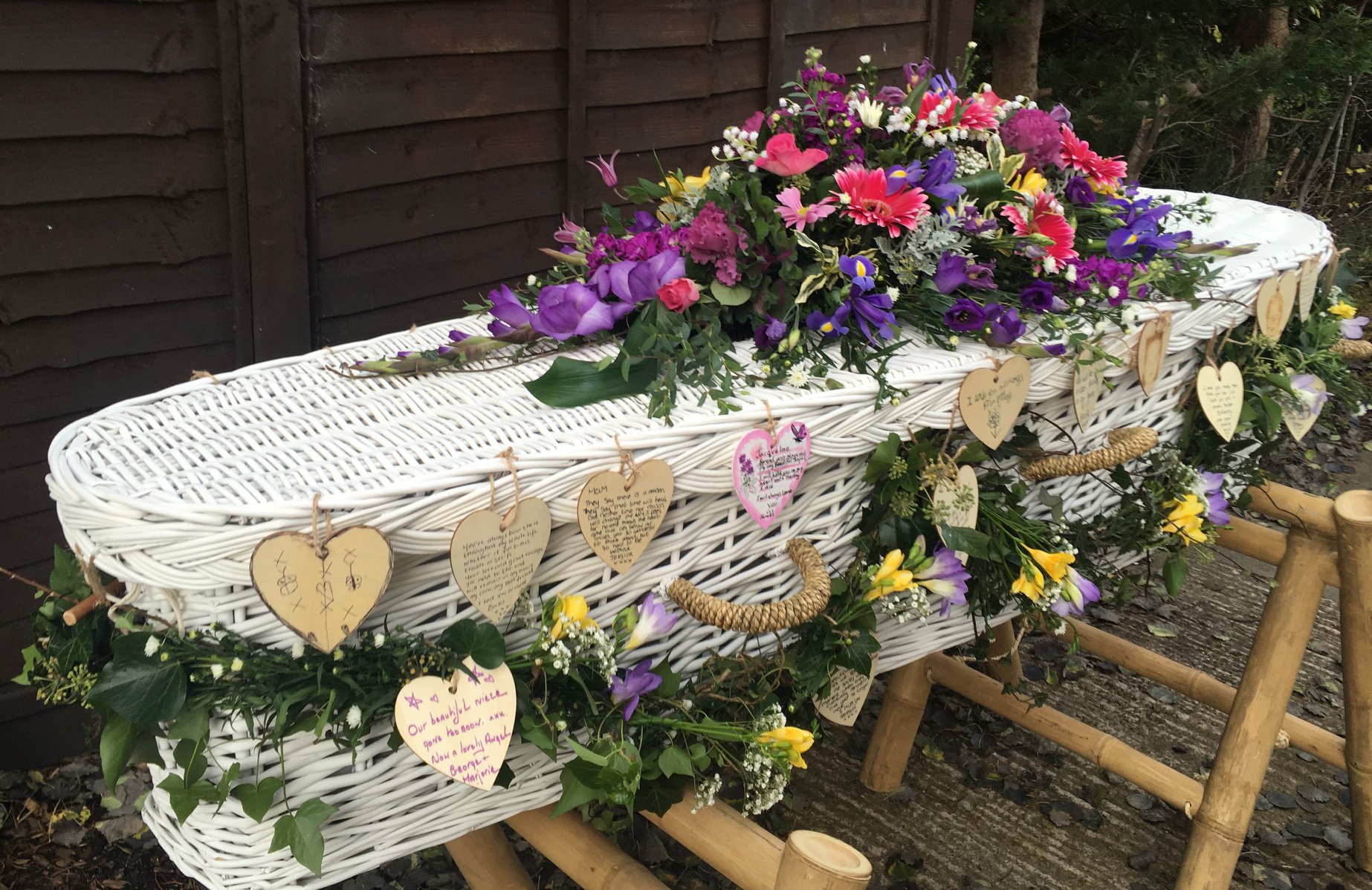
A personalised funeral ceremony. Image courtesy of Funeral Director Tracy Lazonby https://www.finaljourneyfunerals.co.uk/

Each celebrant has a different working style, but what they should all share in common is a desire to create a beautiful bespoke ceremony. To this end, they should not use a questionnaire with the intent of the family writing all the information for the eulogy. Gathering memories is a co-creative process which takes time and care.


Carlisle Cemetery Burial Chapel. Image by Veronika Robinson


The Funeral Director must ensure they know all the legal requirements for their role. These are to do with permits and compliance. When working with a family, they will gather details to do with venue choice, transportation, subcontracting to other bereavement suppliers, such as florists. They are tasked with caring for the body and bringing it safely to the ceremony venue.


Image by Veronika Robinson


As a bereavement celebrant, my role is to meet with the bereaved (next of kin) and learn about their loved one so that I can create, write and present a ceremony that is true to their wishes and values (of the family and of their loved one). The role is a varied mix of listener, creator, storyteller, designer, ritualist, and holder of space. I consider myself Guardian of the Threshold. That is, I am here to walk alongside the bereaved on their journey through the liminal space of saying goodbye.

One thing that is slowly changing in the funeral industry is allowing families to have freedom in their choices. This includes transparency on the part of the Funeral Director, so that the chief mourner knows (at all times) about relevant costs and options. When organising a funeral, there are between 80 and 300 decisions which have to be made. This is overwhelming for families and uses a part of the brain which has no place in the emotions of grieving. Those who work in the field of bereavement should, by nature, have a strong sense of empathy.


The catafalque at Eden Valley Crematorium. Image by Veronika Robinson


As a celebrant, my services are far reaching: traditional funerals, alternative funerals, cremation services, burials, eco-burials, spiritual goodbyes, child funerals, suicide bereavements, family-led ceremonies, celebration of life, living funerals, memorials and more. As the Holder of Space, I am there to receive all the love, laughter, sorrow and sadness, memories and more from each family I serve. These connections are deep and meaningful, and when I work again with a family (on subsequent bereavement/s) this becomes even more so. The most important thing to remember when working with a celebrant, is that they are accompanying you on your journey and will advocate for you no matter what your choices: unconventional, traditional, sacred, dynamic, fun, tender, spiritual or humanist.


Celebrant’s view: When these seats are filled, it is our job to ‘hold the space’ and steady the journey. Image by Veronika Robinson


Veronika Robinson has been officiating all manner of ceremonies since 1995. She has a Master’s Degree in Creative Writing from University of Cumbria, and is the author of over thirty books, including several for celebrants: The Five Elements; The Successful Celebrant; Write That Eulogy; Funerals for Children; The Discrimination-free Celebrant.
She is a certified Infant Loss Professional; founder of Penrith’s first Death Café; has a TQUK Level 2 Certificate in Self-harm and Suicide Awareness and Prevention; is a celebrant for the charity Gift of a Wedding; mentors celebrants around the world in all aspects of celebrancy, including mastering writing life stories and love stories; and hosts retreats for celebrants. Veronika founded and edited The Celebrant magazine. Issues 1 to 13 can be found here. Alongside her husband Paul www.paulrobinsonvoicecoaching.co.uk , they are industry leaders offering one-to-one professional celebrant training.


October 15, 2025/0 Comments/by Veronika Sophia Robinson
http://veronikarobinson.com.temp.link/wp-content/uploads/2023/11/ashgatelanechapel3.jpg 608 1080 Veronika Sophia Robinson https://veronikarobinson.com/wp-content/uploads/2025/04/Updated-logo-colour.png Veronika Sophia Robinson2025-10-15 11:14:492025-10-15 11:36:16Funeral celebrant and funeral director; do you know the difference?
Page 3 of 58‹12345›»

About Veronika

Veronika Sophia Robinson is a celebrant, celebrant trainer, and the author of many non-fiction books and novels.

Facebook

Latest News

  • Walking the Path of the Ancestors: From Wismar to Modern CelebrationsJune 14, 2026 - 8:42 pm
  • The Five Elements of Everyday Ceremony: Grounding Magic at HomeJune 13, 2026 - 8:41 pm
  • How Small Objects Hold Our Grandmothers’ MagicJune 13, 2026 - 7:40 pm
  • The Power of the Circle: Female Solidarity in The Gypsy Moon TrilogyJune 12, 2026 - 7:52 pm
  • Late Bloomer, Wild Flowering: Reclaiming Your Creative NarrativeJune 12, 2026 - 4:13 pm

Contact Me

Email:
veronikarobinson@hotmail.com
Phone:
01768 898 748
07717 222695

Sign up to Veronika's mailing list

© Veronika Sophia Robinson
  • Facebook
  • Twitter
  • Instagram
  • Pinterest
Scroll to top